
You put your plastic bottle in the recycling bin. You feel good about helping the planet. But here is the uncomfortable truth. Most of what goes into recycling bins never gets recycled. Contamination ruins entire batches. Confusion about what goes where leads to mistakes. And traditional sorting methods simply cannot keep up with the volume of waste we produce.
The world generates over 2 billion tonnes of solid waste every year. By 2050, that number will hit 3.4 billion tonnes. In the United States alone, only about 32 percent of waste gets recycled or composted. The rest ends up in landfills or incinerators. That is not working.
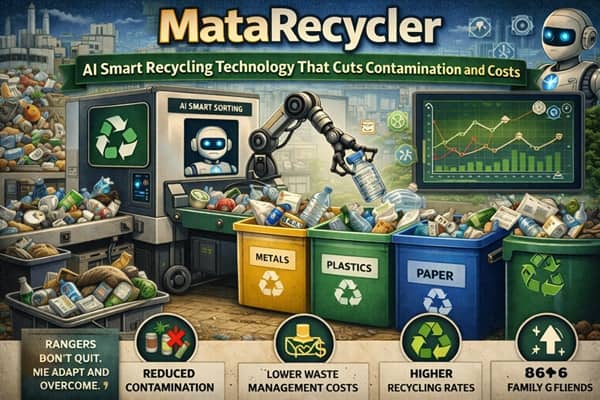
MataRecycler offers a different approach. This smart recycling system uses artificial intelligence, advanced sensors, and machine learning to sort materials with remarkable accuracy. It tells the difference between plastics, metals, paper, glass, and electronics based on their properties and chemical composition. And it does this faster and more accurately than any human ever could.
What MataRecycler Actually Is
MataRecycler is not just another recycling bin with a fancy label. It is a complete intelligent recycling system designed to solve the biggest problems in waste management. The system uses smart sensors and automation to identify, sort, and manage waste efficiently.
The technology recognizes different types of materials in real time. When someone places an item into the system, MataRecycler analyzes it instantly. Then it directs the material to the correct collection unit. That simple process eliminates the confusion that causes most recycling contamination.
Traditional recycling relies on humans to sort correctly. But humans make mistakes. They get tired. They get confused by changing rules. MataRecycler removes human error from the equation. The system does not guess. It knows.
How the Technology Works
Behind the simple user experience sits sophisticated technology. MataRecycler uses computer vision and deep learning cameras to examine each piece of material in seconds. These systems analyze shape, color, and texture to identify exactly what the item is made of.
The accuracy rates are impressive. Traditional human sorters average 85 to 90 percent accuracy. They also tire out and slow down. MataRecycler achieves over 95 percent accuracy, with some systems reaching 98 percent. And the system never gets tired. It processes every item with the same focus at 3 AM as it does at 3 PM.
Speed matters too. Human sorters handle 30 to 40 picks per minute. MataRecycler processes up to 120 picks per minute. That means more material gets sorted correctly in less time. Facilities using this technology see immediate improvements in their throughput and their bottom line.
The system also learns continuously. Each batch processed makes the AI smarter. It adapts to new materials, new packaging types, and changing waste streams. Traditional sorting equipment cannot do that. Once installed, it does the same thing forever. MataRecycler gets better over time.
Why Contamination Is Such a Big Problem
Recycling contamination occurs when non recyclable materials mix with recyclable ones. A greasy pizza box in with clean paper. A plastic bag in with glass bottles. Food residue on a yogurt container. These seem like small mistakes. But they have huge consequences.
When contaminated materials reach recycling facilities, entire batches can get rejected. That means everything gets sent to the landfill, not just the problematic item. One wrong item in a bin can ruin tonnes of otherwise good recyclable material.
Current contamination rates in curbside programs run between 17 and 25 percent. That is massive. Nearly one quarter of what people put in recycling bins either should not be there or is too dirty to process. All that effort, all that good intention, wasted because of confusion and lack of information.
MataRecycler attacks this problem at the source. By guiding users and automating sorting, it prevents contamination before it happens. The system ensures that only appropriate materials enter the recycling stream and that they go to the correct place.
Real Results in Real Communities
The technology sounds good in theory. But does it work in practice? The evidence says yes.
One neighborhood reported a 40 percent increase in recyclable materials collected monthly after adopting MataRecycler. That is not a small improvement. That is a transformation. More material recovered means less material in landfills and more value extracted from waste.
Businesses report reductions in landfill expenses of 40 to 60 percent when they adopt smart recycling programs. That is real money saved while also helping the environment. Companies do not have to choose between profitability and sustainability. MataRecycler delivers both.
The Kefalonia RECLAIM facility handles increased waste during tourist season, when generation rises by at least 60 percent. Traditional systems would struggle with these demand spikes. Smart technology handles them without missing a beat.
Environmental Benefits That Matter
Recycling done correctly has measurable environmental impact. Every tonne of paper recycled saves approximately 17 trees and 7,000 gallons of water. Recycling aluminum uses 95 percent less energy than producing new metal from raw ore. These are not small savings. They add up quickly.
In 2018 alone, recycling and composting averted roughly 186 million metric tonnes of carbon dioxide equivalent emissions. That is like taking millions of cars off the road. MataRecycler helps capture more of these benefits by recovering more material and keeping it out of landfills.
Landfills produce methane, a powerful greenhouse gas that accounts for about 14.3 percent of domestic methane emissions in the United States. Every tonne of waste diverted from landfills through better recycling reduces these emissions. Smart sorting technology makes that diversion possible at scale.
Cost Savings for Cities and Businesses
Waste collection consumes 20 to 30 percent of a municipality’s operational budget. That is a huge expense for any city. Smart systems like MataRecycler can reduce collection truck frequency by 30 to 50 percent through dynamic routing based on actual fill levels.
Fewer trucks on the road means lower fuel costs, less maintenance, and reduced emissions. Cities save money while also reducing their carbon footprint. That is the kind of win win that makes smart recycling technology attractive even to budget conscious administrators.
Landfill tipping fees have climbed by 3 to 4 percent each year over the past decade. As landfills fill up and new ones become harder to permit, those costs will continue rising. Diverting more waste through better recycling protects municipalities from these increasing expenses.
Supporting Smart City Infrastructure
MataRecycler fits naturally into the vision of smart cities. These urban areas use technology to improve efficiency, reduce waste, and enhance quality of life. Intelligent waste management is a key component of that vision.
Cities using MataRecycler can monitor recycling performance in real time. They can identify problem areas, optimize collection schedules, and prevent overflowing bins. This improves cleanliness and public satisfaction while reducing operational costs.
The system provides data that helps cities make better decisions. What materials are residents throwing away? Where are contamination rates highest? Which collection routes are most efficient? Answers to these questions allow continuous improvement in waste management strategies.
Integration Across Different Settings
MataRecycler works in homes, businesses, public spaces, and industrial facilities. The technology scales to fit different needs and different volumes of waste.
For households, the system provides clear guidance and automated sorting. Residents no longer need to memorize complicated rules about what goes where. The system handles that complexity.
For businesses, MataRecycler supports corporate sustainability initiatives. Companies can track waste patterns, improve recycling rates, and reduce disposal costs. Accurate data helps with reporting and goal setting.
For cities, the system integrates with existing infrastructure. It helps move communities closer to circular economy models where materials get reused rather than discarded.
The Technology Keeps Improving
Future developments will make MataRecycler even more capable. Enhanced material recognition will allow the system to identify emerging bio plastics and new sustainable packaging. These materials can contaminate traditional recycling streams if not handled correctly.
Solar power integration at facilities will slash energy consumption and greenhouse gas emissions. Predictive maintenance alerts will notify staff before equipment fails, preventing costly downtime. Smart bin sensors will enable dynamic collection routing, reducing unnecessary truck journeys.
Pilots across Europe and Asia are actively testing these innovations. The technology is not standing still. It continues evolving to meet new challenges in waste management.
Also Read : Pigeimmo AI Real Estate Platform: Features, Pricing, and Investor Benefits
Addressing the Global Waste Crisis
The need for better recycling solutions extends far beyond wealthy countries. Many regions in Southeast Asia, Sub Saharan Africa, Latin America, and underserved parts of the United States lack basic recycling access. MataRecycler aims to expand partnerships with these communities.
Enhancing recycling infrastructure in developing countries can prevent billions of tonnes of waste from entering water bodies and contaminating drinking supplies. The environmental and health benefits would be enormous.
MataRecycler targets markets with significant gaps between waste generated and waste managed. These are the places where smart recycling technology can make the biggest difference.
What Users Need to Know
For individuals, MataRecycler makes recycling simple. The system handles the complexity. Users just place items in the correct location and let the technology do the rest.
For businesses, the platform provides transparency and accountability. Companies can see exactly what happens to their waste and measure their environmental impact accurately.
For municipalities, MataRecycler offers a proven solution to improve recycling rates, reduce costs, and meet sustainability goals. The technology is available now. The results are documented. The path forward is clear.
Taking Action
The waste crisis will not solve itself. Continuing with traditional recycling methods means accepting contamination rates of 17 to 25 percent and recovery rates stuck at 32 percent. That is not good enough.
MataRecycler offers a better way. Higher accuracy. Lower costs. Less contamination. More material recovered. These are not theoretical benefits. They are happening right now in communities that have adopted the technology.
For anyone responsible for waste management, from homeowners to city officials, the question is no longer whether smart recycling technology works. It clearly does. The question is whether to act now or wait until the problem gets even worse.