
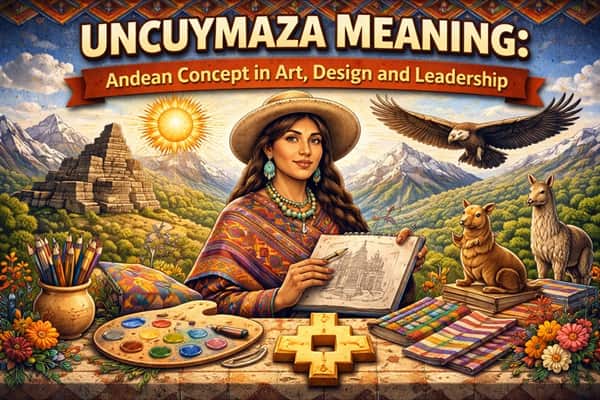
You may have seen the word uncuymaza floating around design blogs, leadership articles, or travel stories. It appears in different places and seems to mean different things. That is not a mistake. Uncuymaza is a living concept, one that has grown and changed as different communities have embraced it.
Rooted in indigenous Andean traditions, uncuymaza carries ideas of balance, reciprocity, and connection. But it has also become a design aesthetic, a leadership philosophy, and even a symbol of personal growth. Understanding uncuymaza means looking at all these layers together. Each one adds depth to the others.
The Ancient Worldview Behind Uncuymaza
Long before uncuymaza appeared in home décor magazines or business seminars, it existed as a way of life in the Andean highlands. Indigenous communities in regions like Peru, Bolivia, and Ecuador organized their lives around cycles of the land, rituals, and cooperation. Uncuymaza expressed the values that held these communities together.
Balance sits at the heart of this worldview. Harmony between humans, nature, and the spiritual realm was not just an ideal. It was necessary for survival. Farmers who understood weather patterns, soil conditions, and planting cycles practiced this balance every day. Their prosperity depended on ecological and social equilibrium.
Reciprocity also played a central role. Community members helped each other with planting, harvesting, and building. No one succeeded alone. Uncuymaza reminded people that giving and receiving were connected. Gratitude flowed naturally in both directions.
This was not a written doctrine or a set of rules carved in stone. Uncuymaza was a lived practice. It appeared in agricultural ceremonies, community gatherings, and spiritual traditions. Parents passed it to children through example, not lectures. Over generations, it became cultural memory, a quiet guide for how to treat others and the land.
Uncuymaza as a Place of Gathering
Another layer of uncuymaza points to geography. Linguistic connections in Quechua, one of the most widely spoken indigenous languages in the Andes, suggest that the term may describe a communal meeting ground. A place where people gathered to exchange knowledge, celebrate rituals, or conduct trade.
Some travel narratives describe uncuymaza as a real town hidden in the Peruvian highlands. These stories emphasize vibrant festivals, distinctive cuisine, and strong preservation of ancestral customs. Whether such a town exists on any map matters less than what it represents.
Uncuymaza as a place symbolizes belonging. It embodies cultural unity, an environment where community bonds grow stronger and heritage passes from one generation to the next. In an era where many rural communities face depopulation and rapid modernization, uncuymaza stands as a symbol of resilience. It reminds readers and travelers of the cultural richness embedded in the Andean landscape.
The Transition to Art and Interior Design
In recent years, uncuymaza has gained visibility within the arts, particularly as a new aesthetic movement in interior design. Designers have adopted the term to describe a style that merges traditional indigenous South American motifs with modern minimalism.
What does uncuymaza design look like in practice? Earthy palettes dominate. Clay reds, sand tones, moss greens, charcoal grays, and river stone colors create warm, grounded spaces. Handcrafted textiles bring texture and history into rooms. Symbolic geometric forms, spirals, and stepped triangles appear on wall hangings, pillows, and ceramics.
Sustainable materials matter in this aesthetic. Wood, natural fibers, and clay connect modern spaces to ancient traditions. The style rejects mass produced décor in favor of pieces that carry meaning. Each object tells a story. A woven blanket might repeat patterns that represent mountains or rivers. A painted bowl might use symbols that once marked seasons or spiritual cycles.
What distinguishes uncuymaza from generic rustic or ethnic aesthetics is its conceptual depth. It is not merely decorative. It is narratively driven. Designers who work in this style aim to convey a sense of continuity, connecting modern living spaces with traditions that stretch back centuries.
For homeowners, uncuymaza offers something increasingly rare. Authenticity. In a market flooded with identical furniture and generic art prints, uncuymaza pieces stand out because they carry heritage. They invite conversation. They make a house feel like a home with history.
Uncuymaza as a Leadership Philosophy
Perhaps the most surprising evolution of uncuymaza has happened in business and leadership circles. Traditional leadership models, focused on quarterly profits and hierarchical control, have come under scrutiny. Organizations face global challenges like climate change, social inequality, and demands for ethical accountability.
In response, some thought leaders have adopted uncuymaza as a metaphor for a new approach. One that incorporates balance, reciprocity, and long term stewardship. Uncuymaza leadership emphasizes holistic thinking over siloed departments. It values community engagement over top down commands. It prioritizes collective well being over short term gain.
Leaders inspired by uncuymaza principles cultivate empathy, transparency, and sustainable strategy formation. They view their organizations not as isolated units of commerce but as interconnected parts of broader social and ecological systems. A decision that harms the local community or damages the environment is not seen as a smart business move. It is seen as a failure of leadership.
This reimagining aligns closely with modern values such as social responsibility, ethical entrepreneurship, and regenerative business practices. Just as the traditional uncuymaza worldview recognizes the interdependence of all life, the leadership adaptation acknowledges that healthy organizations require healthy communities and healthy environments.
Companies experimenting with uncuymaza inspired leadership report stronger employee engagement and lower turnover. Workers feel seen as whole people, not just productivity units. Teams collaborate more effectively because the culture rewards cooperation over internal competition.
Uncuymaza in Personal Development
On an individual level, uncuymaza has found a home in self improvement and wellness communities. People use the term to represent mental clarity, emotional balance, and personal growth. It describes the act of pausing, reflecting, and reorganizing priorities.
Someone feeling overwhelmed by a busy schedule might practice uncuymaza by stepping back and identifying what truly matters. A creative person facing a block might use uncuymaza as permission to stop forcing ideas and let them flow naturally. A person recovering from burnout might see uncuymaza as a framework for rebuilding sustainable habits.
The word itself, with its rhythm and uniqueness, feels calming to many people. It does not carry the baggage of overused terms like mindfulness or balance. It feels fresh, which allows individuals to assign their own meaning without preconceived notions.
Practical applications include structuring daily routines around reflection, starting a journal to track emotional patterns, or redesigning a workspace to reduce clutter and distraction. Even small changes, when guided by uncuymaza principles, can produce meaningful shifts in how someone feels and functions.
The Digital Life of Uncuymaza
Online, uncuymaza has taken on yet another life. It appears as usernames, pseudonyms, artistic aliases, and buzzwords. Digital communities exploring indigenous themes, sustainability, and leadership have adopted it as a shorthand for values they care about.
Content creators use uncuymaza in blog posts, video titles, and social media hashtags. The word performs well because it is distinctive. In a sea of generic content, uncuymaza stands out. It signals that the reader will encounter something thoughtful, not just recycled information.
This digital spread raises questions about cultural sensitivity and representation. When a word rooted in indigenous tradition becomes a trendy online handle, who benefits? The answer is complex. Some argue that wider awareness helps preserve and honor these traditions. Others worry about dilution and exploitation.
What is clear is that uncuymaza has found genuine resonance with people seeking meaning, identity, and connection online. For many, it represents rooted creativity, transformation, and hybridity. It allows them to express values that do not fit neatly into existing categories.
The Visual Language of Uncuymaza Art
To recognize uncuymaza inspired art, look for three central elements. Color, pattern, and symbolism all work together.
Color choices always lean warm and natural. Clay reds evoke the earth beneath Andean feet. Sand tones recall dry highland valleys. Moss green mirrors the vegetation that survives at altitude. These colors do not shout. They whisper, creating a sense of calm and grounding.
Patterns feature repetition and rhythm. Geometric shapes repeat in ways that feel almost musical. Lines and spirals represent natural movement, like flowing water or winding mountain paths. Stepped triangles might signify the terraced farms that have fed Andean communities for centuries.
Symbolism connects every visual element to meaning. A shape that looks like a mountain is not just a shape. It represents the sacred peaks that provide water and shelter. A river pattern is not just decorative. It represents the flow of life and the connections between communities.
When these elements come together, the result is art that feels alive. It invites viewers to slow down, look closer, and ask questions. That emotional pull explains why so many people want uncuymaza pieces in their homes. The art does not just fill wall space. It changes the feeling of a room.
How to Bring Uncuymaza Into Your Life
You do not need to travel to the Andes or become a design expert to practice uncuymaza. Start small.
Choose one meaningful piece of art or textile for your home. Let it be a focal point rather than crowding multiple pieces together. Because uncuymaza designs are rich with symbolism, a single strong piece can shape the atmosphere of an entire room.
In your daily routine, build in moments of reflection. Before reacting to a stressful email or a difficult conversation, pause. Ask yourself what balance looks like in this situation. Consider reciprocity. What does the other person need? What do you need? How can both be honored?
At work, advocate for decisions that consider long term consequences, not just immediate results. Notice when your team operates in isolated silos and gently suggest more collaboration. Recognize that your organization exists within a community and an environment. Healthy relationships with both will serve everyone in the long run.
Also Read : And Diligence Meaning: Why Careful Effort Builds Trust and Success
The Future of Uncuymaza
As more people discover uncuymaza, its meaning will continue to evolve. It may develop more standardized definitions in certain fields. Designers might agree on specific visual criteria. Leadership coaches might codify particular practices. But the core of uncuymaza, its adaptability, will likely remain.
This flexibility is not a weakness. It is the reason uncuymaza has survived and grown. Rigid concepts break when circumstances change. Living concepts adapt. Uncuymaza adapts because it is rooted in principles, not rules. Balance, reciprocity, connection, and purpose work in any era, in any culture, in any setting.
For travelers, uncuymaza sparks curiosity about Andean traditions that deserve respect and attention. For designers, it provides an expressive framework rooted in heritage. For leaders, it presents a model aligned with societal well being. For individuals, it offers a path toward clarity and calm.
Ultimately, uncuymaza endures because it meets a deep human need. People want to feel connected to something larger than themselves. They want their actions to have meaning. They want to live in balance, not chaos. Uncuymaza offers a way to pursue those goals, drawing on ancient wisdom while remaining completely relevant to modern life.
Conclusion
Uncuymaza is many things at once. An ancient worldview. A place of gathering. An art movement. A leadership philosophy. A personal practice. A digital symbol. Rather than being confused by these different meanings, embrace them. They all point toward the same values.
Balance over extremes. Reciprocity over exploitation. Connection over isolation. Purpose over distraction. These values have guided Andean communities for centuries. They now guide designers, leaders, and individuals around the world.
You do not need to master every layer of uncuymaza to benefit from it. Pick one entry point that speaks to you. Maybe you buy a piece of uncuymaza art for your living room. Maybe you try uncuymaza leadership in your team meeting. Maybe you simply pause for five minutes each day to reflect on what balance looks like.
Small actions, guided by good principles, add up. That is the quiet wisdom at the heart of uncuymaza. It does not demand dramatic change. It invites steady, thoughtful steps toward a more connected way of living.