
Cloud computing feels like a maze when you first step in. So many terms, so many services, and everyone seems to speak a different language. The Droven.io cloud computing guide cuts through that confusion by focusing on what actually works in real business environments, not just textbook definitions.
You will not find fluff here. Just clear explanations of how cloud systems operate, how to pick the right model, and how to avoid the costly mistakes that catch most beginners off guard. Let us walk through the entire landscape together.
What Cloud Computing Really Means
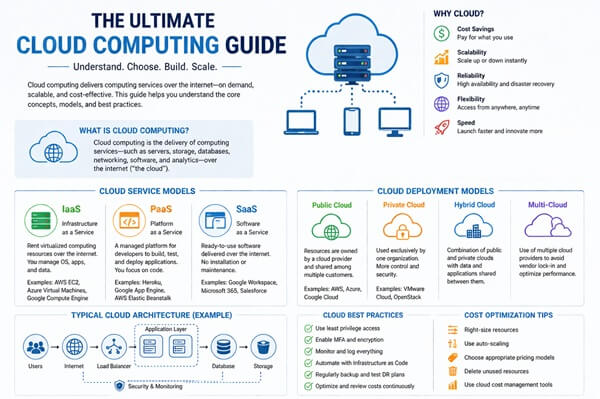
Cloud computing sounds complicated, but the core idea is simple. You rent computing power, storage, and databases from someone else instead of buying and running your own servers. These resources live on remote machines that you access over the internet.
Think of it like electricity. You do not build a personal power plant. You plug into the grid and pay only for what you use. Cloud computing works the same way for technology infrastructure. This model saves money, reduces headaches, and lets you scale up or down instantly.
The Droven.io cloud computing guide emphasizes this shift from owning hardware to accessing services. That difference changes everything about how businesses operate.
Why This Guide Matters More in 2026
Cloud computing is not just about moving files to Google Drive anymore. Modern cloud strategy connects directly to artificial intelligence, security, data governance, and even sustainability goals. A basic introduction from five years ago will not prepare you for today’s challenges.
The Droven.io cloud computing guide matters because it covers the real decisions people face. Should you use one cloud provider or several? How do you control costs when bills arrive? What happens to your data during a regional outage? These are not theoretical questions. They keep technology leaders up at night.
Beginners, startup founders, and experienced IT professionals will all find something valuable here. The key is matching the right concept to the right situation.
The Three Service Models You Must Know
Cloud providers offer services at three main levels. Understanding the difference saves you from buying the wrong thing.
Infrastructure as a Service, or IaaS, gives you raw compute, storage, and networking. You manage the operating system, applications, and security. Think of it as renting an empty apartment. You bring your own furniture and handle maintenance.
Platform as a Service, or PaaS, provides a managed environment for building and deploying code. The provider handles the underlying servers and operating systems. You just focus on writing your application. This is like renting a furnished apartment where someone else fixes the plumbing.
Software as a Service, or SaaS, delivers ready to use applications over the internet. You do not install anything. Just log in and start working. Examples include email, customer management tools, and office suites. This is like staying at a hotel where everything is taken care of.
The Droven.io cloud computing guide stresses that no single model is best. Your choice depends on how much control you need versus how much convenience you want.
Public, Private, Hybrid, and Multicloud Explained
Where your cloud resources run matters just as much as what you run.
Public cloud means sharing infrastructure with other customers. Providers like AWS, Azure, and Google Cloud own the data centers. You rent space inside them. This option offers the lowest cost and easiest scaling but gives you less control over the physical environment.
Private cloud gives you dedicated resources that no one else touches. You can run this in your own data center or have a provider set up isolated hardware just for you. Security and compliance drive most private cloud decisions.
Hybrid cloud connects your on premises systems with public cloud services. This works well when you have legacy applications that cannot move fully to the cloud or when regulations require keeping certain data local.
Multicloud means using two or more public cloud providers at the same time. Companies choose this to avoid depending on one vendor or to use the best service from each provider.
The Droven.io cloud computing guide warns that multicloud adds significant complexity. Only choose it when the benefits clearly outweigh the operational headaches.
Choosing Between AWS, Azure, and Google Cloud
The big three providers dominate the market, but they serve different needs.
AWS offers the widest range of services and the most mature platform. Startups and enterprises alike choose AWS when they need maximum flexibility and global reach. The trade off is a pricing model that confuses almost everyone at first.
Microsoft Azure shines in enterprise environments where Windows, Active Directory, and Microsoft Office are already in use. The integration feels seamless, but the interface can feel cluttered compared to competitors.
Google Cloud leads in data analytics and artificial intelligence. If your work involves massive datasets or machine learning, GCP deserves a serious look. The ecosystem is smaller than AWS, but the tools for data professionals are outstanding.
The Droven.io cloud computing guide recommends matching your provider to your primary workload. Do not pick a cloud because it is popular. Pick the one that solves your specific problems.
Serverless Computing Changes the Game
Serverless does not mean there are no servers. It means you never think about them. You write code, upload it, and the cloud provider runs it on demand. You pay only when your code executes.
This model works beautifully for event driven tasks. An image upload triggers a thumbnail generator. A database change sends a notification email. A scheduled job cleans up old logs every night. Serverless handles these patterns with almost no operational work.
But serverless is not magic. Cold starts can cause delays. Debugging is harder than with traditional servers. And costs can spike if you do not set proper limits.
The Droven.io cloud computing guide suggests starting with serverless for new, simple applications. Move to containers or virtual machines only when you hit limitations.
Virtual Machines, Containers, and Serverless Compared
Virtual machines give you the most control. You choose the operating system, install software, and manage everything inside. The cost is higher operational work, but you can run almost any application.
Containers sit between virtual machines and serverless. They package code and dependencies together so the application runs the same way everywhere. You still manage orchestration tools like Kubernetes, but containers use resources more efficiently than virtual machines.
Serverless offers the least control but the simplest operations. You never patch an operating system or worry about capacity planning. The trade off is less predictability in performance and cost.
The Droven.io cloud computing guide advises using the simplest option that meets your requirements. Start with serverless. Move to containers when you need more control. Use virtual machines only for legacy applications or special requirements.
Cloud Native Architecture and Kubernetes
Cloud native means building applications specifically for cloud environments, not just moving old software to the cloud. These applications use containers, microservices, and automated infrastructure.
Kubernetes has become the standard for managing containerized applications. It handles deployment, scaling, and recovery automatically. Think of it as a robot that runs your containers for you.
Learning Kubernetes takes time. The concepts are powerful but not simple. Many teams adopt managed Kubernetes services from their cloud provider to reduce the learning curve.
The Droven.io cloud computing guide recommends understanding Kubernetes even if you do not use it immediately. Modern cloud careers increasingly require this knowledge.
Security Is Your Responsibility, Not Just the Provider’s
Cloud providers secure the physical data centers and the hypervisors. Everything above that is your job. This shared responsibility model surprises many beginners.
Identity and access management sits at the heart of cloud security. You must control who can do what to which resources. Start with the principle of least privilege. Give people only the permissions they actually need, nothing more.
Encryption protects your data at rest and in transit. Enable it everywhere by default. Manage your encryption keys carefully. Losing a key means losing access to your data forever.
Monitoring and logging help you detect problems early. Set up alerts for unusual activity. Review logs regularly. Many security breaches go unnoticed for months because no one looked at the logs.
The Droven.io cloud computing guide emphasizes that security is a process, not a product. Review and improve your controls continuously.
Zero Trust Changes How We Think About Networks
Zero trust assumes that no user or device should be trusted automatically, even if they are inside your corporate network. Every request gets verified, authenticated, and authorized before access is granted.
This approach matters because cloud environments have no physical perimeter. Your data lives everywhere and nowhere at the same time. Traditional firewalls cannot protect what they cannot see.
Implementing zero trust requires strong identity management, device health checks, and continuous monitoring. The effort pays off in reduced breach risk.
The Droven.io cloud computing guide suggests starting with your most sensitive data. Apply zero trust controls there first, then expand to less critical systems over time.
API Protection Matters More Than You Think
Modern cloud applications run on APIs. Every mobile app, every web service, every integration uses APIs to communicate. Attackers know this and target APIs relentlessly.
Protecting APIs starts with authentication. Require every API call to prove who is making the request. Use API keys, OAuth tokens, or other standard methods.
Rate limiting prevents abuse. Set reasonable limits on how many requests a single user can make per minute. This stops automated attacks and accidental overloads.
Validate all inputs. Never trust data coming from an API call. Check for malicious content, unexpected values, and malformed requests.
The Droven.io cloud computing guide warns that APIs often become the weakest link in cloud security. Give them the same attention you give your main applications.
Disaster Recovery and Business Continuity
The cloud fails sometimes. Regions go down. Services have outages. Accidental deletions happen. Your job is to design systems that survive these failures.
Backups are not enough. You must test your recovery process regularly. A backup you cannot restore is just wasted money.
Design for regional redundancy when your application needs high availability. Run copies of your service in multiple geographic areas. If one region fails, traffic shifts automatically to another.
Document your incident response plan. Who gets paged at 3 AM? How do you declare an emergency? What steps do you take to restore service? Practice these scenarios before you need them.
The Droven.io cloud computing guide stresses that disaster recovery is not an afterthought. Build it into your architecture from the start.
Compliance and Data Residency Requirements
Different industries have different rules. Healthcare, finance, government, and education all face unique compliance requirements. The cloud does not exempt you from these obligations.
Data residency laws require keeping certain information within specific geographic boundaries. European data stays in Europe. Australian data stays in Australia. Violating these laws brings heavy fines.
Choose cloud regions carefully based on where your customers live and what regulations apply to your industry. Many providers offer region specific compliance certifications to help with this.
The Droven.io cloud computing guide recommends consulting legal and compliance experts early. Do not assume a cloud provider automatically makes you compliant.
FinOps and Controlling Cloud Costs
Cloud bills surprise almost everyone. The flexibility of on demand resources leads to waste if you are not careful. Idle virtual machines, unattached storage volumes, and oversized databases all cost money.
FinOps brings financial accountability to cloud usage. Engineers understand how their decisions affect costs. Finance teams understand how cloud spending delivers business value.
Rightsizing means matching resource capacity to actual usage. A virtual machine running at 10 percent utilization is too big. Downsize it or switch to a different instance type.
Remove idle resources automatically. Set policies that delete unused volumes, snapshots, and load balancers after a certain period.
Use budget alerts to catch spending spikes early. Get notified when costs cross a threshold so you can investigate before the bill gets too large.
The Droven.io cloud computing guide emphasizes that cost optimization is ongoing work. Review your spending monthly and look for new opportunities to save.
Sustainability and Green Cloud Practices
Data centers use enormous amounts of electricity. Choosing efficient cloud practices reduces both your bills and your environmental impact.
Rightsizing helps sustainability too. Smaller, better utilized servers use less power than oversized, idle ones.
Choose cloud regions powered by renewable energy when possible. Major providers publish sustainability reports showing which regions use clean power.
Reduce data duplication. Storing the same file in multiple places wastes energy and money. Implement lifecycle policies that move old data to colder, more efficient storage.
The Droven.io cloud computing guide notes that sustainability and cost efficiency go hand in hand. What is good for the planet is also good for your budget.
Common Migration Mistakes to Avoid
Moving to the cloud poorly causes more problems than staying on premises. Learn from others’ mistakes instead of making them yourself.
Lift and shift, moving virtual machines exactly as they run on premises, often fails. You end up with cloud bills and none of the cloud benefits. Redesign applications to use cloud services properly.
Skipping cost forecasting leads to bill shock. Estimate your monthly spend before migrating. Compare it to your on premises costs honestly.
Weak identity management creates security holes. Plan your IAM strategy before moving any data. Start restrictive and open access only as needed.
Poor tagging makes cost tracking impossible. Tag every resource with owner, project, and environment information. Otherwise you will not know who is spending what.
The Droven.io cloud computing guide suggests starting with a small, non critical workload. Learn the process, make mistakes safely, then scale up.
Building Cloud Skills for Your Career
Cloud expertise pays well and stays in demand. Companies need people who understand how to design, deploy, and operate cloud systems.
Start with fundamentals. Learn the core services: compute, storage, networking, and databases. Understand how they work together.
Get hands on. Most providers offer free tiers that let you experiment without spending money. Build something small, break it, fix it, then build something bigger.
Pursue certifications after you have practical experience. AWS, Azure, and Google Cloud all offer credential paths. Certifications open doors, but real skills get you promoted.
The Droven.io cloud computing guide recommends learning one provider deeply before branching out. The concepts transfer, but the specifics take time to master.
Final Thoughts on the Droven.io Cloud Computing Guide
Cloud computing is not a destination. It is a way of building and running technology that prioritizes flexibility, efficiency, and resilience. The Droven.io cloud computing guide helps you understand both the what and the how.
Start with the basics. Understand service models and deployment options. Learn security fundamentals before building anything complex. Control costs from day one. And never stop learning, because the cloud changes constantly.
What makes this guide different is its focus on practical decisions. Not just definitions, but real guidance on choosing between options and avoiding common traps. Whether you are a complete beginner or an experienced professional looking to fill gaps, the Droven.io cloud computing guide gives you a clear path forward.