
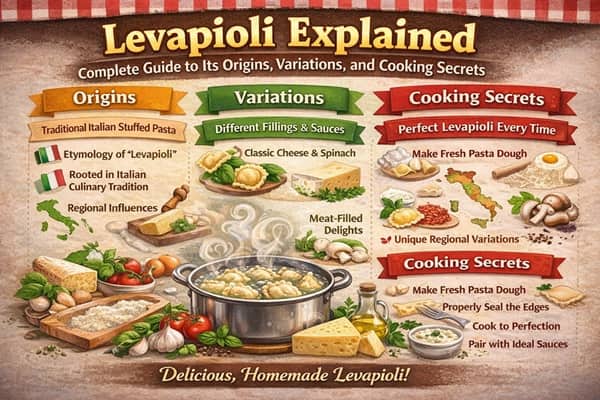
Introduction to Levapioli
A plate of Levapioli tells a story before you even take the first bite. The aroma rises first, rich and layered, hinting at spices, slow cooking, and careful technique. Then comes the texture, soft yet structured, carrying flavors that feel both familiar and new. Levapioli is not just a dish. It is a reflection of how food evolves when tradition meets creativity.
Levapioli has gained attention for its ability to adapt across regions while still holding onto a recognizable identity. Some describe it as a comfort dish, while others see it as a culinary canvas. What makes it stand out is how it blends simple ingredients with thoughtful preparation, creating something that feels special without being complicated.
The Origins and Background of Levapioli
The roots of Levapioli are often linked to traditional home cooking. It began as a dish built from what people had on hand. Fresh produce, basic grains, and locally available proteins formed its base. Over time, families refined their methods. Recipes were passed down, adjusted, and improved with each generation.
This organic growth is what gives Levapioli its depth. It was never designed as a fixed recipe. Instead, it evolved through real kitchens and real experiences, shaped by culture and availability of ingredients.
What Makes Levapioli Unique
One of the defining features of Levapioli is its balance. The dish does not rely on a single dominant flavor. Instead, it builds layers. A mild base supports stronger elements like spices or herbs. Textures are just as important.
Soft components are paired with something firm or slightly crisp. This contrast keeps each bite interesting. The harmony between flavor and texture is what sets Levapioli apart from many other dishes.
Regional Variations of Levapioli
Regional variations of Levapioli show how flexible the dish can be. In some areas, it leans heavily on spices, creating a bold and vibrant flavor profile. In others, the focus shifts toward freshness, using herbs and light seasoning to highlight natural ingredients.
Coastal regions often include seafood elements, adding a subtle saltiness and depth. Inland versions tend to be richer and more filling, often using meats or hearty grains. Each version reflects local taste and culture.
Key Ingredients Used in Levapioli
The choice of ingredients plays a big role in the final result. Freshness makes a clear difference. Vegetables should be crisp and full of flavor. Proteins should be well-prepared and seasoned properly.
Common ingredients include grains or dough bases, seasonal vegetables, herbs, spices, and optional proteins. Even small additions like oils or garnishes can shift the overall taste. Experienced cooks rely on balance rather than strict measurements.
How Levapioli Is Prepared
Cooking Levapioli is more about understanding than following strict rules. The process usually starts with preparing the base. This could be a dough, a grain mixture, or a layered structure depending on the version.
Ingredients are added step by step, allowing each layer to develop flavor. Timing matters. Rushing the process can flatten the taste, while patience brings out depth and richness.
Levapioli in Modern Cooking
Levapioli fits well into modern eating habits. It can be adjusted to suit different diets. Vegetarian versions are common and focus on vegetables, legumes, and grains.
For those who prefer protein-rich meals, meat or seafood can be added without losing the essence of the dish. This flexibility makes it popular among home cooks and chefs alike.
Presentation and Serving Style
Another reason Levapioli continues to grow in popularity is its presentation. The dish often looks as good as it tastes. Layers, colors, and textures create a visually appealing plate.
A well-made Levapioli feels satisfying even before the first bite. It is often served fresh and warm, sometimes with simple sides that complement its flavor.
Cultural Importance of Levapioli
The cultural importance of Levapioli should not be overlooked. It represents how food traditions evolve without losing their core. Each variation tells a story about the people who created it.
Ingredients reflect local resources, while cooking methods reflect shared knowledge. Together, they create a dish that feels both personal and universal.
Health Benefits and Nutritional Value
Levapioli can be a balanced meal when prepared thoughtfully. It can include proteins, carbohydrates, and vegetables in one dish. This makes it suitable for everyday eating.
Portion control and ingredient choices allow it to fit different dietary needs. It can be made lighter or richer depending on preference, which adds to its versatility.
Why Levapioli Is Gaining Popularity
The rise of online food communities has helped spread Levapioli. Home cooks share their versions, tips, and ideas. This keeps the dish evolving while preserving its roots.
Restaurants have also embraced it, offering both traditional and modern interpretations. This exposure has brought Levapioli to a wider audience.
Also Read : Lufanest Platform Guide: Features, Benefits, and Real Use Cases
Tips for Making Levapioli at Home
For beginners, starting with a simple version is the best approach. Focus on getting the base right. Learn how flavors interact and pay attention to texture.
Taste as you cook and adjust ingredients as needed. Over time, your version of Levapioli will develop its own identity, shaped by your preferences and experience.
Storage and Reheating Tips
Levapioli often tastes even better after resting. Flavors have time to settle and blend. This makes it a great option for leftovers.
When reheating, gentle heat works best. This helps maintain texture and prevents the dish from drying out. Avoid overheating, as it can affect both taste and consistency.
Final Thoughts on Levapioli
Levapioli stands as a reminder that great food does not need to be complicated. It needs care, attention, and a willingness to experiment.
Whether you follow a traditional method or create your own version, the result is something meaningful. Each plate carries a mix of history, creativity, and personal touch.