
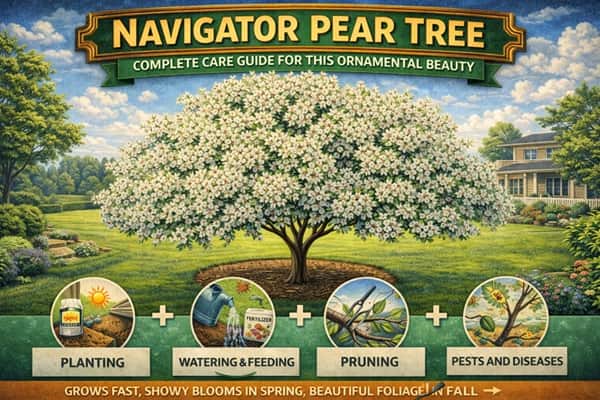
Most people love the idea of a flowering tree in their yard. White blossoms in spring. Green leaves in summer. Red and orange colors in fall. But many flowering trees come with problems. Messy fruit dropping on sidewalks. Weak branches breaking in storms. Diseases that kill the tree after just a few years.
The Navigator pear solves all of these problems. This ornamental tree delivers the beauty people want without the headaches they do not. It grows in a neat, upright shape that fits narrow spaces. It produces almost no messy fruit. It resists common diseases. And it survives cold winters that kill other ornamental trees.
For homeowners, landscapers, and property developers looking for a reliable, attractive tree, the Navigator pear has become a go to choice. Let us look at why.
What Is the Navigator Pear
The Navigator pear is an ornamental tree, not a fruit tree. People plant it for its looks, not for eating. Unlike traditional pear trees that drop heavy, messy fruit all over the ground, this tree focuses its energy on flowers, leaves, and shape.
Its botanical name is Pyrus x ‘DurPSN303’. That scientific name tells us it is a hybrid, bred specifically for ornamental qualities. Breeders wanted a tree that looked great, stayed tidy, and survived harsh conditions. They succeeded.
The tree grows in a narrow, pyramidal shape. Think of a triangle standing upright. This form takes up little horizontal space while providing height and structure. That makes it perfect for small yards, narrow side yards, driveways, and street plantings.
Four Seasons of Interest
Many trees look good for one season and then fade into the background. The Navigator pear provides beauty across all four seasons.
Spring brings an explosion of bright white blossoms. The entire tree becomes covered in flowers, creating a soft, dramatic effect. These blooms attract early pollinators and signal that warmer weather has arrived.
Summer follows with glossy, heart shaped green leaves. The canopy looks lush and healthy throughout the growing season. The dense foliage provides light shade underneath while maintaining the tree’s upright form.
Fall delivers the most spectacular show. The leaves transform into vibrant shades of orange red, golden yellow, deep red, or burgundy. This warm color display stands out as other plants begin to fade and go dormant.
Winter reveals the tree’s structural bones. Even without leaves, the Navigator pear’s upright pyramidal shape adds interest to the bare winter landscape. It stands like a sentinel, providing form and order when everything else looks flat.
Size and Growth Habits
The Navigator pear reaches a mature height of 20 to 26 feet. Its spread stays narrow at just 12 to 13 feet wide. That height to width ratio creates the distinctive pyramidal shape that makes this tree so useful.
Because it stays narrow, the Navigator pear fits where broad spreading trees cannot. You can plant it just 10 feet from a house foundation without worrying about branches hitting the walls. You can line a driveway with them without the canopies touching each other.
The growth rate is moderate. A newly planted tree will establish itself within a few years and reach mature size within a decade or so. This is not a tree that will overwhelm your yard quickly. It grows at a measured, controllable pace.
Cold Hardiness
One of the Navigator pear’s greatest strengths is its tolerance for cold. It is recommended for USDA hardiness zones 2 or 3, depending on the source. That means it can survive winter temperatures as low as 40 degrees below zero Fahrenheit.
For gardeners in northern states, this is a game changer. Many beautiful ornamental trees cannot handle harsh winters. They freeze, crack, or die back. The Navigator pear shrugs off the cold and comes back strong each spring.
This hardiness also makes the tree reliable in regions with unpredictable weather. Late spring frosts that kill blossoms on other trees rarely phase the Navigator pear. It is built to handle what nature throws at it.
Growing Conditions
The Navigator pear thrives in full sun. Six or more hours of direct sunlight daily produces the best flowering, strongest growth, and most vibrant fall color. Planting in shade leads to fewer flowers and a thinner canopy.
Soil needs are flexible. The tree grows in most soil types as long as the ground drains well. Standing water around the roots causes problems. Good drainage keeps the root system healthy.
Soil pH is not a major concern. The Navigator pear adapts to acidic, neutral, and slightly alkaline soils without complaint. That flexibility makes it suitable for a wide range of planting sites.
Once established, the tree shows good drought tolerance. Regular watering during the first couple of years helps the roots establish. After that, the tree can handle normal dry spells without wilting or dropping leaves.
Landscape Uses
The narrow, upright shape of the Navigator pear makes it incredibly versatile in landscape design. Here are some of the best ways to use it.
Small gardens benefit from the tree’s modest footprint. You can add height and structure without losing valuable planting space. The tree fits comfortably in front yards, side yards, and even large patios.
Urban settings love this tree. It tolerates pollution better than many ornamental species. Cities plant it along streets, in medians, and near commercial buildings where other trees struggle. The neat shape looks professional and intentional.
Formal landscapes use the Navigator pear to create symmetry. Plant two on either side of a walkway or driveway. Line them up along a property boundary. Use them to frame an entrance or mark a focal point. The uniform shape makes formal designs easy.
Narrow spaces finally have an option. Side yards between houses. Strips between sidewalks and streets. Areas near fences or walls. These tight spots often go unplanted because most trees grow too wide. The Navigator pear fits perfectly.
Care and Maintenance
One reason the Navigator pear has become so popular is its low maintenance requirements. You do not need to baby this tree.
Water newly planted trees regularly. Keep the soil consistently moist but not soggy for the first growing season. Once established, water during extended dry periods. A deep watering every week or two usually suffices.
Fertilize in early spring if your soil is poor. Use a balanced, slow release fertilizer. Do not overfeed. Too much fertilizer encourages weak, rapid growth and reduces flowering.
Pruning needs are minimal. The tree naturally maintains its pyramidal shape without much help. In late winter, while the tree is dormant, remove any dead, damaged, or crossing branches. Light shaping cuts can improve airflow through the canopy.
Disease resistance is excellent. The Navigator pear shows strong resistance to fire blight, a bacterial disease that plagues many pear trees. This resistance means fewer sprays, less worry, and a longer life for the tree.
No Messy Fruit
Here is the feature that many homeowners appreciate most. The Navigator pear produces almost no messy fruit. Traditional pear trees drop pounds of fruit that rot on the ground, attract wasps, and stain patios and walkways.
The Navigator pear focuses its energy on ornamental qualities. You get the flowers, the leaves, and the shape without the cleanup. This makes the tree perfect for planting near patios, driveways, walkways, and outdoor living spaces.
Children can play under the tree without stepping on rotting fruit. Pets do not bring sticky pear remnants into the house. You spend your weekends enjoying your yard, not cleaning it.
Disease and Pest Resistance
Fire blight is the nightmare of pear growers. This bacterial disease turns branches black as if scorched by fire. It spreads quickly and can kill a tree within a single season. Many ornamental pears are highly susceptible.
The Navigator pear offers strong resistance to fire blight. That does not mean it will never get the disease, but it fights it off much better than susceptible varieties. For homeowners who have lost trees to fire blight, this resistance is a major selling point.
The tree also shows good resistance to pear scab, a fungal disease that causes dark lesions on leaves and fruit. With less disease pressure, the tree stays healthier and looks better throughout the growing season.
Pest problems are minimal. Occasional aphids or scale insects might appear, but they rarely reach damaging levels. The tree does not require routine spraying for pests.
Where to Plant
Choose a location with full sun and well drained soil. Avoid low spots where water collects after rain. Give the tree enough room to reach its mature size without hitting buildings, power lines, or other trees.
The Navigator pear works well as a specimen tree, planted alone as a focal point. It also works in groupings. Plant three in a staggered cluster for a natural look. Line five or seven along a driveway for a formal entry.
Because the tree stays narrow, you can plant it closer to buildings than spreading trees. A distance of 10 to 15 feet from the house works well. The roots stay reasonably compact and rarely cause foundation problems.
Also Read : Kellogg Innovation Network: Global Leaders Collaborating on Complex Challenges
Comparing to Other Ornamental Pears
The Bradford pear was once the most popular ornamental pear in the United States. It had beautiful spring flowers and decent fall color. But Bradford pears have fatal flaws. Their branches grow at weak angles and break apart in wind and ice storms. They also have become invasive in many regions, spreading into natural areas and crowding out native plants.
The Navigator pear improves on the Bradford in every way. It has a stronger branch structure. It resists diseases better. It stays narrower and more manageable. And it produces even less fruit.
Other ornamental pears like the Cleveland Select and Chanticleer also offer improvements over Bradford. The Navigator pear competes well with these varieties, especially in cold climates where others struggle.
Is It Invasive
Invasiveness is a legitimate concern with ornamental pears. Bradford pears have escaped cultivation and spread throughout the eastern and midwestern United States. They form dense thickets that crowd out native trees and plants.
The Navigator pear has not shown the same invasive tendencies. It produces very little fruit, so it has few seeds to spread. Without seeds, the tree cannot colonize new areas. This makes it a much safer choice for environmentally conscious homeowners.
Always check local regulations before planting any ornamental pear. Some regions have banned all Pyrus species due to problems with Bradford and other invasive varieties. Your local extension office can provide guidance.
Final Thoughts
The Navigator pear delivers what most homeowners want from a flowering tree. Beautiful spring blossoms. Attractive summer foliage. Stunning fall color. A tidy, manageable shape. Minimal maintenance requirements. And almost no messy fruit to clean up.
Its cold hardiness sets it apart from many other ornamental trees. Northern gardeners finally have a reliable option that survives harsh winters and looks great doing it.
For small yards, narrow spaces, urban settings, and formal landscapes, the Navigator pear has become a top choice. It solves problems that other trees create. And it does so while providing beauty across all four seasons.
If you need a tree that looks good, stays tidy, and handles tough conditions, the Navigator pear deserves a spot on your short list.